Füreya Koral
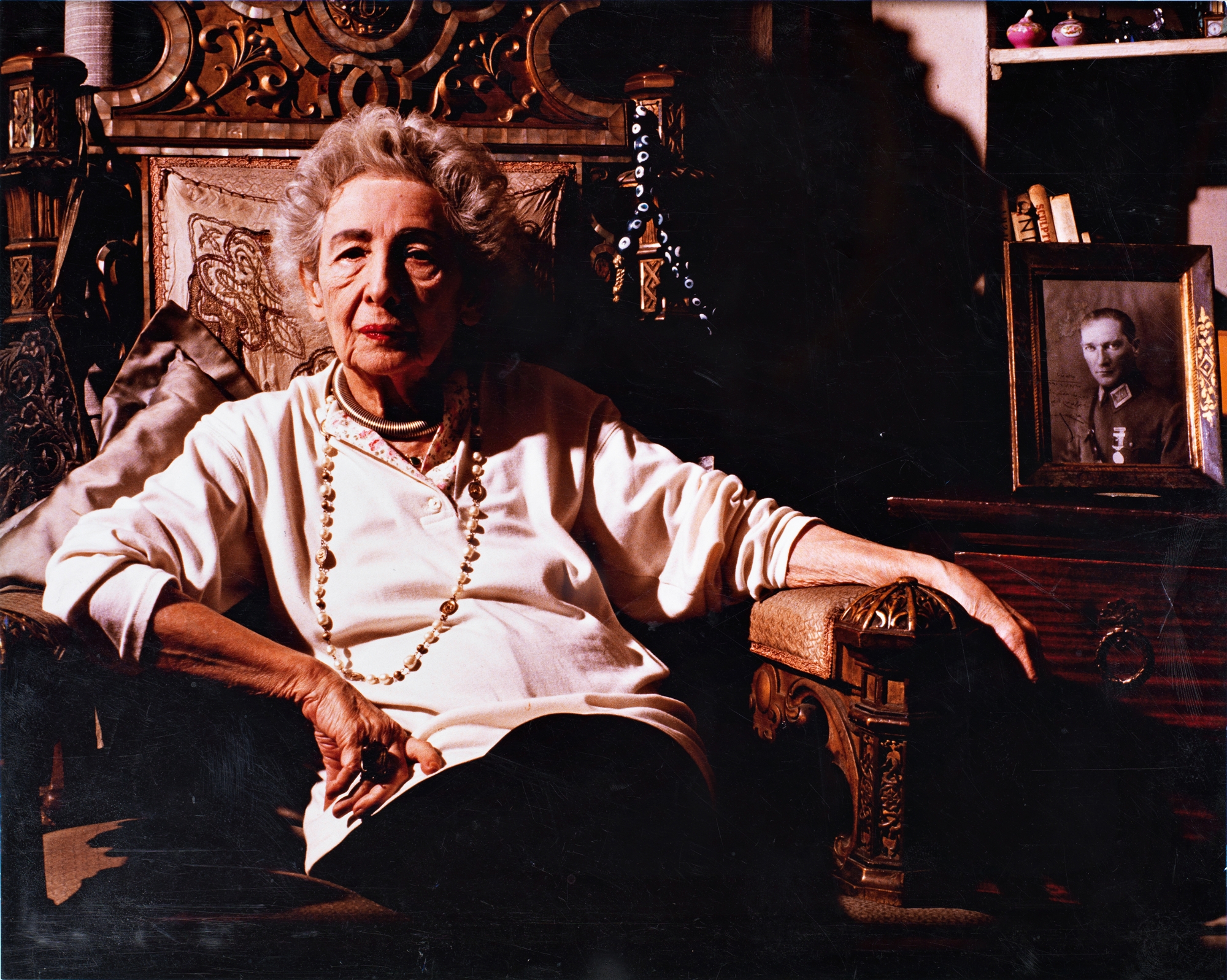
Füreya Koral, the first practitioner of contemporary ceramics in the Republic of Turkey, was born in 1910 on Büyükada. She was a member of the Şakir Pasha family, which witnessed the final years of the Ottoman Empire and the early years of the newly established Republic. Her grandfather, historian and writer Şakir Pasha, held important positions in the Empire. Her father, Emin Koral, was Atatürk’s classmate and comrade in arms. Her aunts included Fahrelnissa Zeid and Aliye Berger, both prominent figures in Turkish painting, and her uncle was the writer Cevat Şakir Kabaağaçlı, famously known as the Fisherman of Halicarnassus.
Growing up in a family that included artistic personalities and bridged the cultural synthesis between the Ottoman Empire and modern Turkey, Füreya Koral became an inspiration for future generations.
After graduating from Notre Dame de Sion Girls’ High School in 1927, she continued her studies in the Philosophy Department at Istanbul University’s Faculty of Letters. She also took private violin lessons from the famous Hungarian virtuoso Charles Berger. Between 1940 and 1944, she wrote music critiques and worked as a translator.
While undergoing tuberculosis treatment in a sanatorium in Leysen, Switzerland, she was introduced to the art of ceramics through her aunt Fahrelnissa Zeid.
In 1947, she began her ceramic work in Lausanne. Subsequently, with the support of renowned French ceramist Serré, she continued her studies at a private ceramics workshop in Paris. Her artistic education in Paris under prominent artists such as Fernand Léger and André Lhote shaped her distinctive style.
Koral held her first ceramic exhibition in 1951 at M.A.I. Gallery in Paris, with the support of J. Lassaigne and Estienne, and also opened an exhibition at Maya Art Gallery in Istanbul that same year. In the following years, she continued to showcase her works in numerous prestigious institutions, including Salon d’Octobre (Paris), Museum of Modern Art (Mexico City), Napstkovo Museum (Prague), and the Smithsonian Institution (Washington). She received numerous international awards and held nearly fifty solo exhibitions, consistently drawing attention to her name and art.
In 1954, she established her own ceramic workshop in Istanbul, which also functioned as a school. In 1958, she designed ceramic coffee cups for the Turkish Pavilion at Expo’58, the Brussels World’s Fair.
During the 1970s, Koral began designing objects as part of her practice. In 1973, she created a special series for the Istanbul Porcelain Factory, marking her early works in this field. She reinterpreted plates, cups, and vases produced by the factory and those created in traditional styles under the influence of modernism, giving them functionality. Through these works, she both democratized art for the public and blurred the boundary between art and craft.
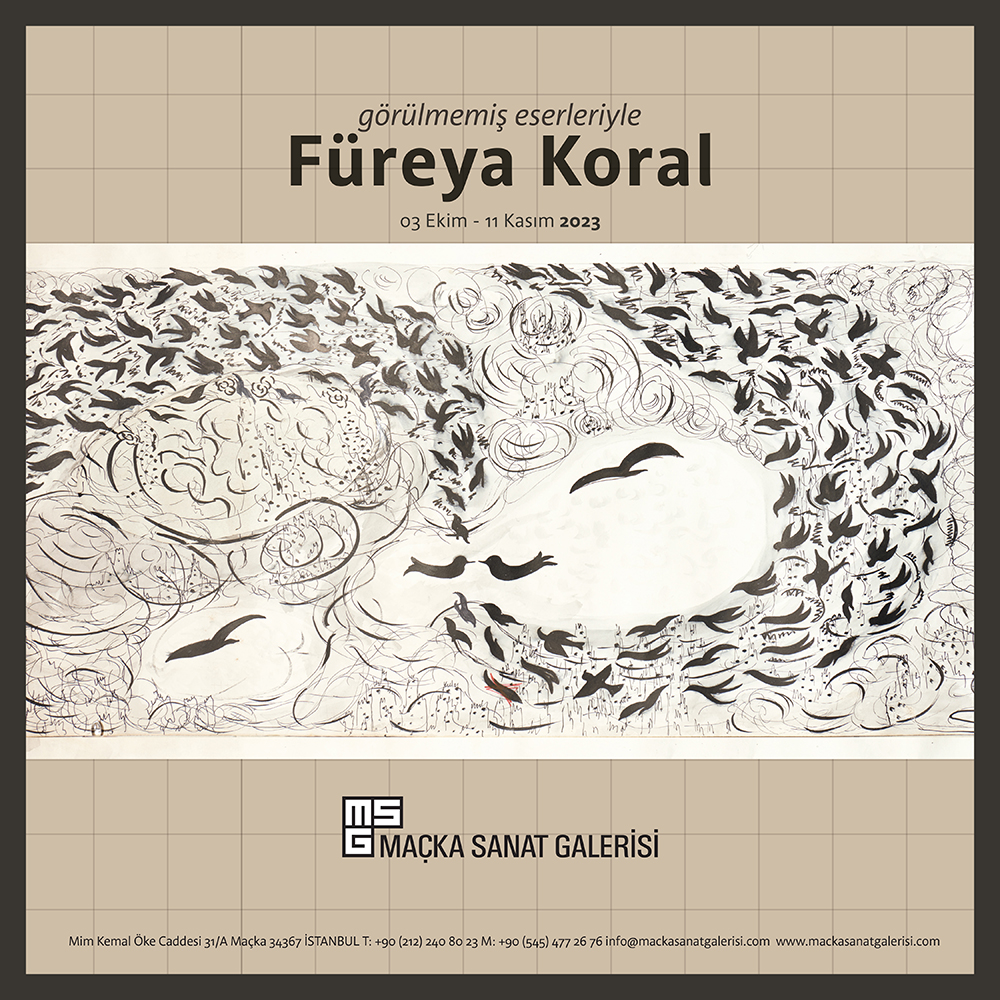
In 1985, Füreya Koral held a solo exhibition at Maçka Art Gallery. In 1992, on the 40th anniversary of her artistic career, the gallery organized the “Tribute to Füreya Koral” exhibition. This included 40 panels, each 40x40 cm, created by 40 ceramic artists in her honor, alongside her own work, Walking People. This exhibition remains the largest participatory celebration held for an artist in Turkey.
Füreya Koral passed away in Istanbul in 1997. In her ninety-seven years, she managed to incorporate music, literature, theater, and cinema into her life, and traces of her entire life can be seen in her works. Drawing inspiration from nearly all areas of art, she shaped her life through her art. Koral integrated ceramics with architecture, merging different disciplines, and gave a contemporary reinterpretation of Turkish tile art, reinvigorating it within modern Turkish architecture.